
First Impressions That Signal Property Standards
Commercial Parking Lot Resurfacing in DeBary for businesses where pavement condition affects customer perception
A commercial parking lot with cracked, faded asphalt and uneven surfaces signals neglect before customers even reach the front entrance, while a freshly resurfaced lot with smooth pavement and crisp striping communicates professionalism and attention to detail. Parking lot resurfacing removes deteriorated surface material and replaces it with a new asphalt overlay that eliminates trip hazards, prevents vehicle damage, and dramatically improves property appearance. HomePro Outdoors LLC coordinates resurfacing projects in DeBary using phased scheduling that keeps portions of the lot accessible during construction, minimizing disruption to business operations while addressing pavement failures that create liability risks and damage the property's reputation.
The resurfacing process involves milling away the top layer of damaged asphalt, repairing any base failures or drainage issues exposed during removal, and installing a fresh overlay that's compacted and graded to direct water toward drainage structures. Unlike residential driveways, commercial lots cannot be shut down completely without impacting revenue, so projects are typically divided into zones that are resurfaced sequentially, allowing traffic to flow through unaffected sections while work progresses. This phased approach requires meticulous planning to maintain access to building entrances, loading zones, and fire lanes throughout the project.
Schedule a lot assessment to evaluate pavement condition and develop a phased resurfacing plan that maintains business operations during construction.
What Resurfacing Accomplishes for Commercial Properties
Commercial lot resurfacing eliminates deep potholes, surface cracks, and uneven pavement that pose trip-and-fall hazards for pedestrians and cause tire damage or suspension issues for vehicles, drastically reducing premises liability exposure that can result in costly lawsuits. The project also provides an opportunity to reconfigure traffic flow, update striping layouts, and ensure full compliance with regional code enforcement requirements, including properly sized ADA-accessible parking spaces with adjacent access aisles, clearly marked fire lanes that meet width and clearance specifications, and pedestrian crosswalks positioned to guide foot traffic safely through the lot.
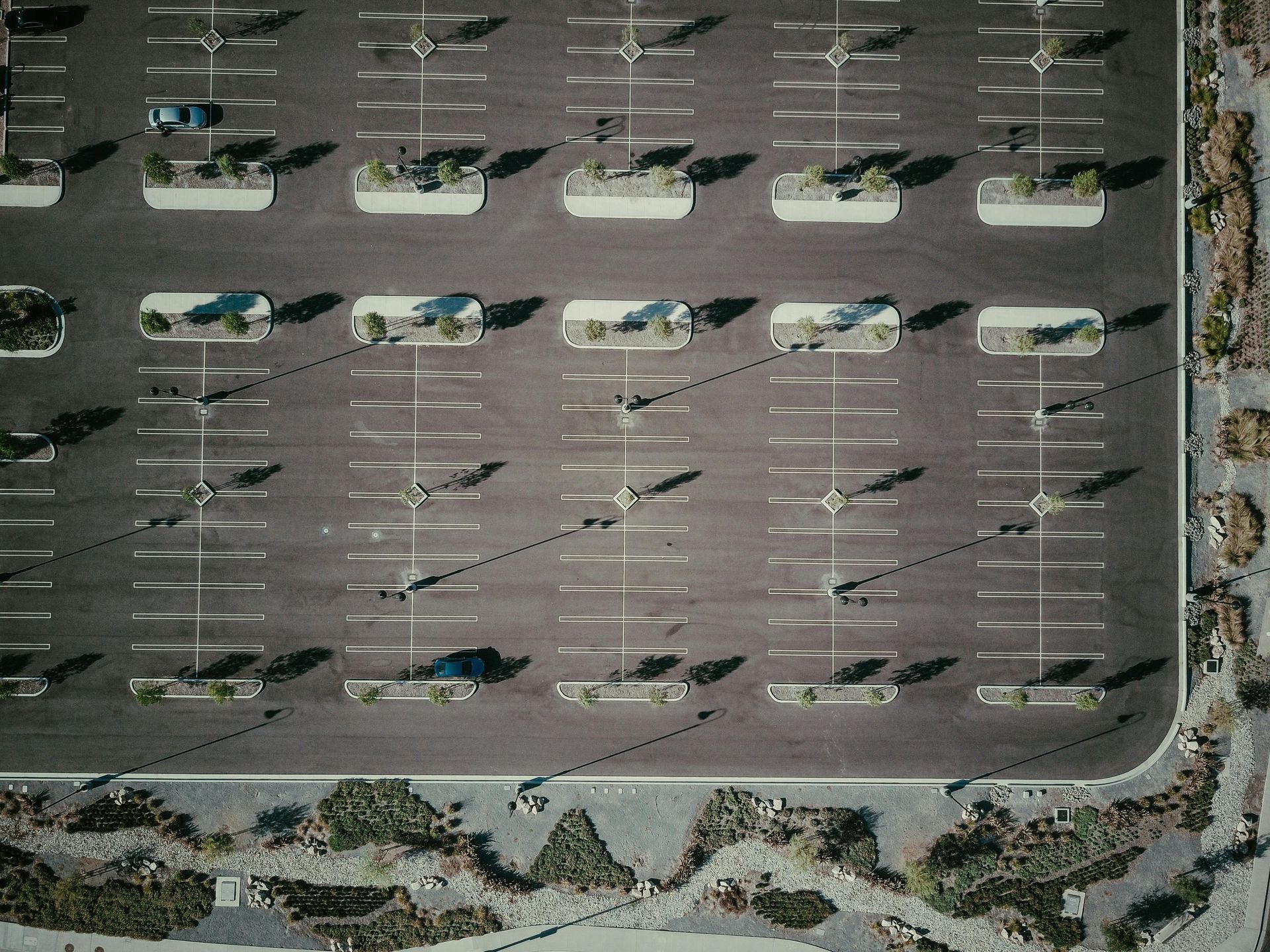
Once resurfacing is complete, the parking lot presents a uniform jet-black surface with bright, reflective striping that guides vehicles efficiently through the space and clearly delineates parking stalls, loading zones, and pedestrian pathways. HomePro Outdoors LLC coordinates with property managers to finalize layouts during the resurfacing process, ensuring striping plans reflect current code requirements and optimize the number of compliant parking spaces available within the lot's footprint. Customers notice the improved surface immediately, as vehicles no longer bounce over potholes or need to avoid deteriorated sections, and the property's exterior appearance aligns with the quality standards communicated inside the business.
Resurfacing requires wiping the pavement clean, which means all previous striping is removed and must be replaced with a layout that meets current regulations, even if the original striping configuration was grandfathered under older code provisions. This stage is critical for ensuring the property remains compliant during inspections and avoids citations for improperly sized accessible spaces, missing fire lane markings, or inadequate pedestrian crossings.
Questions Business Owners Have About Lot Resurfacing
Commercial property owners in DeBary need to understand how resurfacing projects are scheduled and what regulatory requirements must be addressed during the striping phase to maintain compliance.
How is the lot kept operational during resurfacing?
The project is divided into phases, with sections resurfaced sequentially so that parking and access remain available in unaffected zones, and work is often scheduled during off-hours or weekends to minimize customer impact.
What happens if the base layer shows damage during milling?
Exposed base failures are repaired before the overlay is installed, which may involve removing additional material and rebuilding sections with compacted aggregate to create a stable foundation that supports the new asphalt layer.
Why does resurfacing require updating the entire striping layout?
Removing the top layer of asphalt eliminates all existing pavement markings, and code enforcement requires the new striping to meet current ADA and fire lane regulations, which often differ from standards that applied when the original lot was built.
How long does a resurfaced commercial lot last in DeBary's climate?
A properly installed overlay typically extends pavement life by ten to fifteen years, though longevity depends on traffic volume, routine maintenance like crack sealing and sealcoating, and whether drainage systems continue directing water away from the pavement surface.
What documentation is provided after striping is completed?
Property owners receive a layout diagram showing the location and dimensions of all ADA spaces, fire lanes, loading zones, and pedestrian crosswalks, which serves as compliance documentation during inspections and tenant reviews.
HomePro Outdoors LLC manages commercial parking lot resurfacing projects that restore pavement integrity, eliminate liability hazards, and ensure full regulatory compliance while maintaining business access throughout construction. Contact us to evaluate your lot's condition and develop a phased resurfacing schedule that aligns with your operational requirements.